

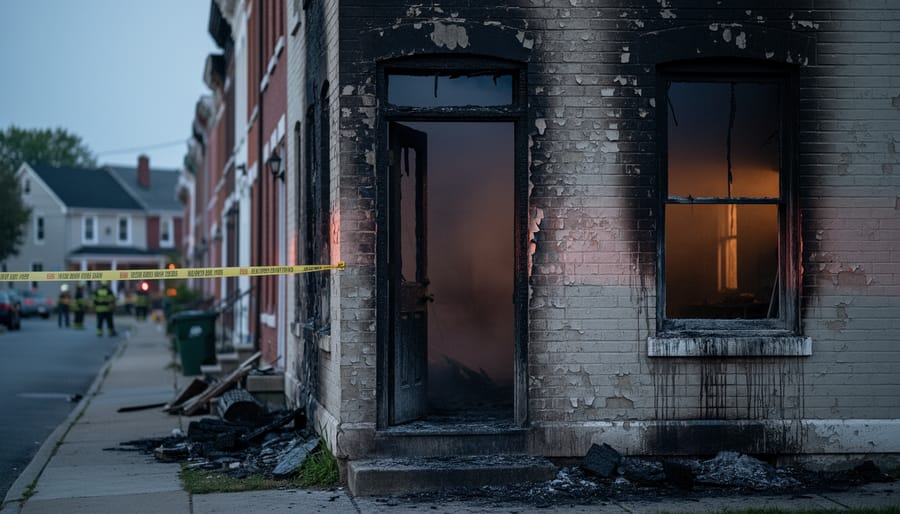
When a residential fire displaces families and leaves charred structures in densely populated neighborhoods, local authorities confront decisions that involve far more than building codes and insurance claims. These scenarios demand careful ethical analysis because choices about condemning, demolishing, or rehabilitating fire-damaged properties directly affect human health, community stability, and distributive justice. The standard response treats fire damage purely as an engineering or economic problem, but this framing obscures fundamental questions about whose interests matter most, who bears the risks of delayed action, and how to balance individual property rights against collective wellbeing.
Public health ethics provides essential tools for examining these competing values, yet the discipline has largely overlooked fire-damaged properties as a distinct category requiring systematic ethical guidance. Unlike contaminated industrial sites or condemned housing, fire-damaged residential structures occupy an ambiguous space where immediate structural hazards intersect with displacement trauma, financial precarity, and neighborhood decay. The ethical stakes intensify when property owners lack resources to rebuild, when tenants face homelessness, or when entire blocks deteriorate following multiple fires. These are questions medicine can’t answer alone. They require input from urban planners, environmental scientists, legal scholars, and community advocates.
Current literature addresses housing ethics and disaster response separately but rarely synthesizes these frameworks for post-fire property management. This gap leaves municipal officials, public health departments, and community organizations without clear ethical principles to guide intervention strategies. Property owners searching to sell fire damaged house fast may face exploitative offers that worsen neighborhood blight, while delays in demolition expose children to asbestos and lead. The following analysis examines these tensions through multidisciplinary lenses, drawing on case studies from Cleveland, Detroit, and Oakland to illustrate how ethical frameworks can inform more just and health-protective responses to fire-damaged properties.
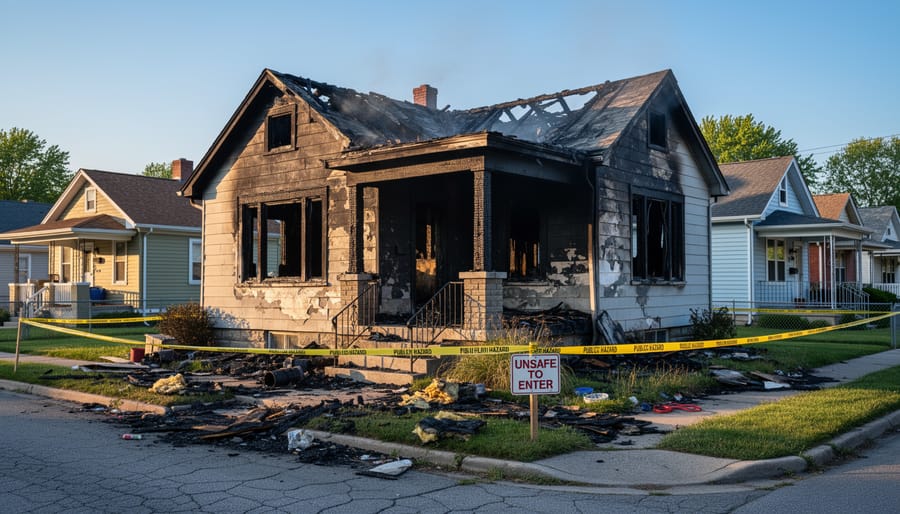
The Public Health Stakes: Beyond Structural Damage
The Exposure Pathway Problem
The hazards within a fire-damaged structure rarely remain contained. Contaminants disperse through multiple environmental pathways, transforming a localized incident into a diffuse, long-term threat. Airborne particulates escape through damaged roofs and broken windows, carrying volatile organic compounds and ash residues into neighboring properties and green spaces. Rain events mobilize these substances further, leaching heavy metals and polycyclic aromatic hydrocarbons into soil profiles and groundwater systems. Within weeks, toxins that originated in synthetic building materials, melted electronics, and charred furnishings can appear hundreds of meters from the source property.
This migration process creates temporal complexity that standard emergency response frameworks struggle to address. The acute hazards of structural collapse and active combustion products fade within days, but the chronic exposure risks persist for months or years. Children playing in contaminated soil, residents breathing resuspended ash particles, and groundwater users downstream all face ongoing exposure through pathways that shift seasonally with weather patterns. The half-lives of certain carcinogens deposited during a fire can extend beyond human lifetimes, making the decision point about remediation or demolition ethically consequential for decades.
The spatial and temporal unpredictability of these pathways creates what toxicologists term the “exposure burden problem.” Unlike controlled environmental releases where monitoring systems track dispersion patterns, fire-damaged properties generate higher risks for vulnerable groups who lack resources to relocate and face cumulative exposures. This dynamic distinguishes fire aftermath from other public health crises where intervention points are clearer and harm pathways more predictable.

Vulnerable Populations and Disproportionate Impact
The burden of fire-damaged property contamination does not fall evenly across populations. Low-income communities face a cruel paradox: they are simultaneously more likely to experience prolonged exposure to toxins from damaged structures and least equipped to relocate or demand remediation. Economic constraints force families to remain in contaminated neighborhoods longer, creating extended exposure windows that magnify health risks. Unlike affluent residents who can temporarily relocate while properties undergo assessment and cleanup, vulnerable populations often have no such option.
Children represent a particularly troubling case. Their developing respiratory and neurological systems absorb contaminants more readily than adult systems, and their hand-to-mouth behaviors increase ingestion pathways for settled particulates and soil contaminants. A five-year-old living near a fire-damaged property faces fundamentally different risk calculations than an adult, yet decision-making frameworks rarely account for these developmental vulnerabilities. The latency period for many fire-related carcinogens means today’s exposure manifests as tomorrow’s disease burden, compressing a child’s lifetime risk profile in ways that adults may never experience.
The elderly and immunocompromised populations encounter dual jeopardy. Compromised respiratory function, reduced detoxification capacity, and pre-existing conditions transform ambient contamination levels considered “acceptable” for healthy adults into significant threats. An older resident with COPD breathing particulate matter from a neighboring burned structure experiences measurably different health outcomes than demographic averages suggest. Yet regulatory thresholds typically reflect population-wide risk assessments rather than these heightened susceptibilities.
These disparities expose a fundamental environmental justice problem. When fire-damaged properties cluster in marginalized neighborhoods, as urban fire patterns and wildfire-urban interface dynamics increasingly ensure, the resulting health burden stratifies along existing lines of inequality. The question of what to do with a fire damaged property thus becomes inseparable from questions about whose health matters, whose neighborhoods warrant rapid intervention, and which communities must shoulder disproportionate risk while remediation decisions languish in bureaucratic processes or legal disputes.
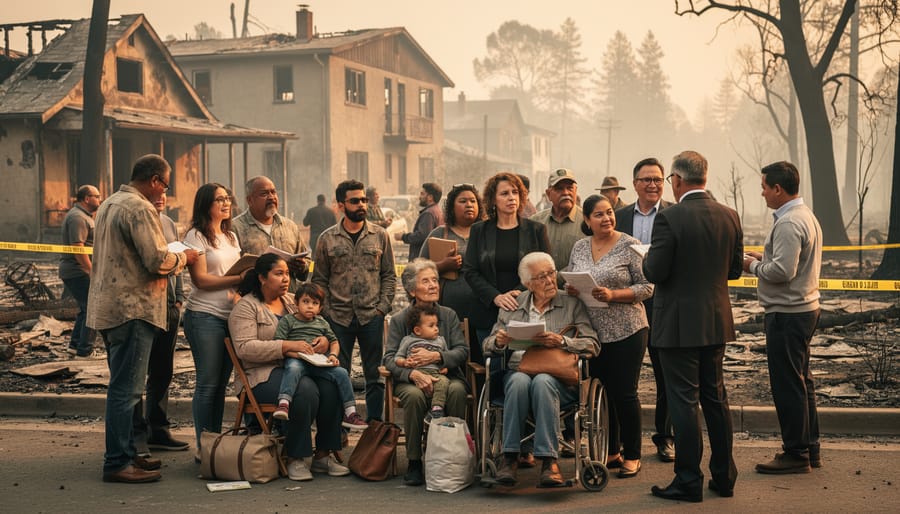
The Ethical Framework: Competing Values in Crisis Response
The Precautionary Principle vs. Property Rights
The precautionary principle holds that when an activity raises threats of harm to human health or the environment, protective measures should be taken even if cause-and-effect relationships are not fully established scientifically. In fire-damaged properties, this principle suggests erring on the side of caution through rapid containment, restricted access, or demolition when contamination levels remain uncertain. Yet this collides with deeply rooted property rights that form the economic and legal foundation of individual autonomy in Western societies.
Property owners facing potential demolition orders argue that their constitutional and common law rights to use, modify, or dispose of their property should not be suspended based on probabilistic risk assessments. They contend that forcing demolition when remediation remains technically feasible, even if more expensive or time-consuming, amounts to a taking without just compensation. The emotional attachment to homes, the disruption to lives and livelihoods, and the financial losses from rapid demolition carry their own forms of harm that must enter the ethical calculus.
The tension intensifies when scientific data remains inconclusive. Standard bioethics principles offer competing guidance: non-maleficence supports precautionary action to prevent potential health harm, while respect for autonomy supports property owner discretion. Justice considerations complicate matters further, as wealthier owners can afford independent testing and legal challenges, while lower-income residents may lack resources to contest government decisions or to pursue either remediation or relocation.
This isn’t an abstract philosophical debate. When authorities in Paradise, California faced thousands of burned properties in 2018, demolition orders overrode owner objections based on toxicity concerns, yet years later some toxicological assumptions proved overstated while psychological harms from forced displacement became clearer. The case illustrates how precautionary actions, while well-intentioned, can impose irreversible consequences that themselves constitute harm.
Distributive Justice and Resource Allocation
Distributive justice demands that we examine not merely whether fire-damaged properties receive appropriate response, but who pays for it and who profits from the decisions made. The financial burden of remediation can exceed hundreds of thousands of dollars per property, placing impossible demands on individual homeowners who have already lost nearly everything. Yet demolition without compensation transfers catastrophic loss entirely to the property owner, raising fundamental questions about where societal responsibility begins and individual risk ends.
Insurance coverage rarely accounts for the full scope of toxic contamination remediation. Standard policies cover structural fire damage but often exclude environmental hazards or limit coverage well below actual remediation costs. This gap forces property owners into devastating choices: accept partial remediation that may leave ongoing health risks, or abandon the property entirely. When local governments declare properties uninhabitable and order demolition, the question becomes stark: does the community that benefits from removing a public health hazard share the cost, or does the individual absorb it alone?
Low-income property owners face this burden most acutely. A 2025 analysis found that households below the median income were four times more likely to abandon fire-damaged properties rather than pursue remediation, creating neighborhood blight that further depresses surrounding property values. The cascading effect punishes entire communities for lacking resources to address hazards they did not create.
Government intervention presents its own justice challenges. Publicly funded remediation or buyout programs must determine eligibility criteria, triggering questions about desert and need. Should assistance prioritize those with lowest incomes, or those facing highest contamination levels? Do renters deserve support, or only property owners? Each criterion embeds a value judgment about whose suffering merits public response.
The allocation question extends beyond individual properties. Public health departments operating under fixed budgets must decide whether to fund comprehensive testing and remediation for fire sites or maintain other community health programs. Every dollar spent addressing fire contamination represents a tradeoff, making distributive justice not merely a philosophical concern but an immediate practical reality with measurable health consequences.
Case Study: The Maui Fires and the Ethics of Rapid Response
When the August 2023 Lahaina fires swept through Maui, destroying over 2,200 structures and killing 100 people, authorities faced an immediate question that exposed deep ethical fault lines: what to do with thousands of properties now contaminated with arsenic, lead, asbestos, and volatile organic compounds. The Hawaii Department of Health initially moved toward expedited demolition of fire-damaged structures, citing acute public health risks from toxic ash dispersal. This decision triggered a confrontation between public health imperatives and community autonomy that remains instructive for policymakers in 2026.
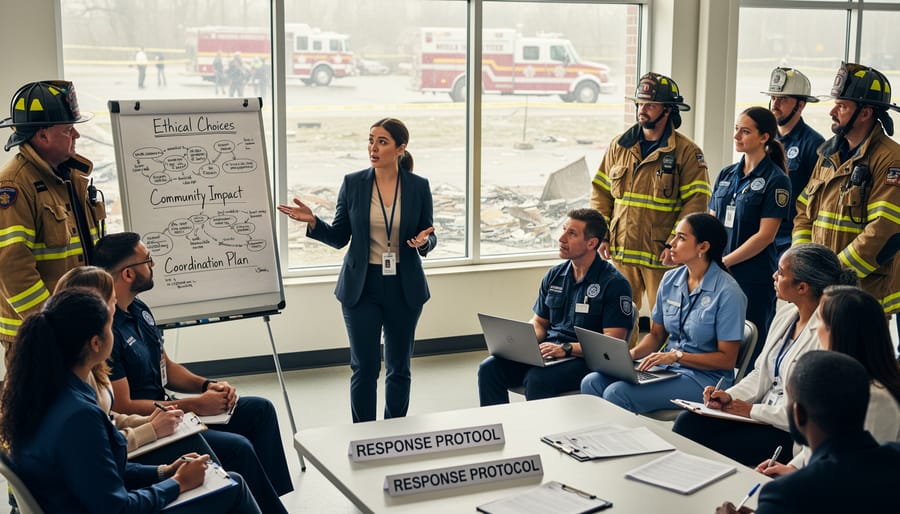
The rapid response protocol authorized demolition teams to begin clearing properties within weeks of the fires, before comprehensive toxicological assessments were complete. Officials justified this approach by invoking the precautionary principle: waiting for definitive long-term health data meant prolonged exposure to known carcinogens for surrounding communities, particularly children attending nearby schools. However, property owners, many Native Hawaiian families with generational ties to their land, argued they were denied meaningful participation in decisions that would permanently alter their community’s landscape. The tension revealed a fundamental problem in crisis bioethics: how to balance urgent harm reduction with the procedural justice requirements of informed consent and community trust.
The consultation process that eventually emerged illuminated the complexity of stakeholder engagement during public health emergencies. State officials held town halls where toxicologists presented data on contamination levels, but many residents reported feeling the forums were designed to inform rather than genuinely solicit input. Cultural practitioners raised concerns that Western risk assessment frameworks failed to account for spiritual and genealogical connections to land that influenced how families weighed health risks against property preservation. Epidemiologists noted that standard informed consent models assume individual decision-makers, yet fire damage created collective exposure scenarios where one owner’s choice to delay remediation affected neighbors’ health outcomes.
The aftermath also exposed gaps in long-term health surveillance infrastructure. While immediate testing documented elevated heavy metal levels in soil and ash, establishing a cohort study to track cancer rates, respiratory outcomes, and developmental effects in exposed children required sustained funding and institutional commitment that proved difficult to secure once media attention faded. By 2026, preliminary data suggest increased respiratory complaints among Lahaina residents, but the absence of pre-fire baseline health metrics complicates causal attribution, an epistemological challenge that highlights the ethical importance of maintaining robust public health monitoring systems before disasters strike.
The Maui case established several precedents now referenced in fire response protocols. Courts ruled that while emergency demolition authority exists, it must be exercised with maximum feasible community input and culturally appropriate communication. The experience also prompted development of rapid ethical review frameworks that can operate within compressed disaster timelines while still honoring principles of justice, beneficence, and respect for persons. These frameworks recognize that what to do with fire-damaged properties cannot be reduced to technical risk calculations but requires ongoing moral deliberation that includes affected communities as partners, not merely subjects of protection.
The Informed Consent Dilemma: Who Decides and What Do They Know?
Communicating Uncertainty Without Causing Panic
Public health officials face a profound ethical paradox when addressing fire-damaged properties: they must acknowledge scientific uncertainty about long-term health effects while simultaneously guiding immediate decisions that affect lives and liveliads. The data on chronic exposure to fire residues remains incomplete, with gaps in our understanding of synergistic effects between multiple contaminants and individual susceptibility factors. Yet waiting for definitive evidence means prolonging exposure to known hazards.
The challenge lies in translating probabilistic risk into language that respects community intelligence without overwhelming decision-making capacity. Effective risk communication requires presenting ranges of possible outcomes rather than false certainties, but without creating the impression that all options carry equal danger. Officials who overstate confidence in preliminary findings betray public trust when later evidence contradicts earlier claims. Those who emphasize uncertainty too heavily risk inducing paralysis, where residents feel unable to act on any information.
The 2026 context adds complexity: communities exposed to repeated wildfire events have developed fatigue toward warnings, while social media amplifies both legitimate concerns and unfounded fears. Public health authorities must therefore calibrate their messaging to acknowledge what remains unknown while clearly articulating what the evidence does support. This means explaining the basis for precautionary measures without implying that every exposure level carries catastrophic risk.
The ethical imperative extends beyond accuracy to include accessibility. Technical risk assessments must translate into actionable guidance for diverse audiences, including those with limited scientific literacy, non-English speakers, and individuals whose past experiences with institutional authority shape their receptivity to official information. Transparency about the limits of current knowledge, paradoxically, can strengthen rather than undermine public confidence when paired with clear explanations of the decision-making process.
Children and Future Generations: Whose Consent Matters?
# Children and Future Generations: Whose Consent Matters?
When fire-damaged properties remain standing, the question of consent becomes particularly vexing for populations who cannot speak for themselves. Children living in or near contaminated sites face exposure during critical developmental windows when their organs, nervous systems, and immune responses are still forming. A five-year-old cannot weigh the abstract risk of neurological damage from lead exposure against the immediate need for housing. Parents or guardians make these decisions as proxies, but even well-intentioned adults may lack the technical expertise to assess long-term health consequences from chronic low-level exposures to fire residues.
The ethical challenge deepens when we consider future occupants. A property deemed “acceptable risk” in 2026 may harbor contaminants that bioaccumulate or interact with yet-unknown environmental stressors decades later. Remediation standards reflect current toxicological knowledge, which evolves. The family moving into a restored fire-damaged home in 2030 cannot retroactively consent to decisions made in 2026, yet they inherit the biological consequences. This temporal mismatch creates what bioethicists call an intergenerational justice problem: those making decisions now will not bear the full weight of potential harms that manifest years later.
Some jurisdictions have responded by applying stricter safety thresholds for properties where children will live, effectively treating pediatric exposure as categorically different from adult risk. Others advocate for long-term health registries that track occupants of remediated properties across decades. Neither approach fully resolves the consent dilemma, but both acknowledge that when we make choices about contaminated environments, we are making choices about bodies that do not yet exist and minds not yet formed.
Multidisciplinary Perspectives on Remediation vs. Demolition
The remediation-versus-demolition decision crystallizes the ethical tensions in fire-damaged property management precisely because different disciplines approach the question from fundamentally incompatible starting points. What appears as a straightforward cost-benefit calculation from one vantage point emerges as a matter of intergenerational justice from another.
Toxicologists typically advocate for a tiered assessment approach. They emphasize that not all fire damage creates equal contamination, and that surface-level charring differs substantially from structural penetration of volatile organic compounds and heavy metals. Dr. Patricia Chen, an environmental toxicologist who studied California wildfire sites through 2025, notes that hasty demolition can paradoxically increase exposure by releasing settled particulates into the air and spreading contaminated debris. From this perspective, careful testing should precede any intervention, with remediation reserved for properties where contaminant levels fall below established thresholds and demolition for those exceeding safe limits by significant margins.
Public health officials operate under a different calculus, balancing individual property concerns against community-wide exposure risks. Their primary consideration centers on preventing ongoing harm to adjacent properties and vulnerable populations. This often leads to more aggressive recommendations favoring demolition, particularly when properties sit in densely populated areas or near schools and healthcare facilities. The urgency stems from understanding that delayed action extends the exposure window, converting acute incidents into chronic public health problems.
| Discipline | Primary Concern | Typical Recommendation | Decision-Making Priority |
|---|---|---|---|
| Toxicology | Accurate contamination assessment | Test before deciding; remediate when feasible | Scientific precision |
| Public Health | Community exposure reduction | Favor demolition in high-density areas | Preventive action |
| Bioethics | Balancing competing moral claims | Participatory decision processes | Procedural justice |
| Economics | Resource efficiency | Cost-effectiveness analysis drives choice | Fiscal sustainability |
| Community Advocacy | Preserving social fabric | Remediation when culturally significant | Community self-determination |
Bioethicists introduce procedural concerns that transcend the technical question. They argue that how the decision gets made matters as much as what decision emerges. This means prioritizing transparent deliberation, meaningful community engagement, and explicit acknowledgment of value trade-offs rather than disguising ethical choices as purely technical determinations. The focus shifts from finding the “right” answer to ensuring the process respects all affected parties’ moral standing.
Economists frame the choice through resource allocation. Remediation costs for heavily damaged properties can exceed demolition and rebuilding expenses by two to three times, particularly when specialized abatement is required. They point out that funds spent on intensive remediation of a single property might address basic demolition and cleanup for multiple sites, raising questions about maximizing public health benefits per dollar spent. This utilitarian logic, however, struggles to account for non-market values like historical significance or community attachment.
Community advocates consistently emphasize that properties represent more than physical structures. They carry historical memory, anchor neighborhood identity, and embody decades of family investment. For these stakeholders, demolition feels like erasure, particularly in communities already experiencing displacement pressures. They push for remediation attempts even when more expensive, arguing that procedural equity demands giving property owners every reasonable chance to preserve what they built.
The most challenging cases arise when these perspectives align in different directions for the same property. A modest home in a low-income neighborhood might fail cost-benefit analysis yet hold irreplaceable cultural value. A structurally sound building might present manageable contamination levels but sit adjacent to an elementary school. These conflicts reveal that the remediation-demolition question cannot be resolved through expertise alone. It requires explicit ethical deliberation about which values take precedence when they cannot all be honored simultaneously.
The Temporal Dimension: Immediate Safety vs. Long-Term Health
The tension between addressing immediate hazards and protecting long-term health creates one of the most consequential ethical dilemmas in fire-damaged property management. Emergency responders and public health officials face pressure to act swiftly, to demolish unstable structures, remove visible contamination, and allow displaced residents to return or rebuild. Yet this urgency, while understandable, can foreclose options that better serve long-term health outcomes.
Consider the calculus that unfolds in the weeks after a major fire. Structural collapse poses clear, quantifiable risks: falling debris can kill or injure people. Toxic ash visible to the naked eye triggers public alarm. These immediate dangers demand action, and demolition offers a definitive solution. The ethical appeal of rapid intervention rests on the principle of non-maleficence, preventing imminent harm trumps other considerations.
But this framing obscures slower-acting threats that may ultimately cause greater cumulative harm. Carcinogens absorbed into building materials don’t announce themselves with visible danger. Lead dust released during hasty demolition settles into surrounding soil, where it remains bioavailable for decades. Asbestos fibers, if not carefully contained during removal, become airborne and migrate into neighboring properties. The very urgency that justifies quick action can inadvertently multiply long-term exposure pathways.
Gradual remediation approaches, by contrast, prioritize containment and careful removal of hazardous materials before any demolition occurs. These methods reduce secondary contamination and preserve the possibility of salvaging property while protecting community health. Yet they require time, specialized expertise, and sustained funding, luxuries that displaced residents and cash-strapped municipalities rarely possess.
The ethical question isn’t whether immediate safety matters, but whether our preference for visible, short-term interventions systematically undervalues diffuse, long-term harms. A child exposed to lead from rushed demolition may not show cognitive effects for years. A neighbor who inhales asbestos fibers during uncontrolled debris removal may develop mesothelioma three decades later. These harms are no less real for being delayed, yet they rarely influence emergency decision-making with the same force as an unstable wall.
This temporal mismatch reveals a fundamental challenge in public health ethics: our institutional structures, funding mechanisms, and political incentives all favor rapid resolution over sustained stewardship, even when the latter better serves the principle of beneficence across time.
Policy Implications and Governance Challenges for 2026
The 2026 policy landscape for fire-damaged property management reveals a fractured system where ethical principles compete with bureaucratic inertia and jurisdictional turf battles. Current regulations in most jurisdictions focus narrowly on structural safety codes and hazardous materials disposal, with minimal attention to the public health ethics questions that previous sections have established as central to just response. This gap leaves property owners, neighboring residents, and local officials navigating decisions with ethical weight but without ethical guidance embedded in policy frameworks.
Regulatory inconsistency across state, county, and municipal lines creates perverse incentives and inequitable outcomes. A fire-damaged home in one California county may face mandatory demolition based on precautionary public health principles, while an identical scenario twenty miles away in another jurisdiction results in minimal oversight and the burden falling entirely on the property owner. This variation reflects not differences in actual risk but differences in administrative capacity, political will, and the strength of property rights lobbies in each area. Insurance companies exploit these gaps, interpreting policies narrowly to minimize payouts while governments struggle with unclear liability boundaries about who bears responsibility for long-term health surveillance when contaminated properties receive occupancy permits.
The governance challenges extend beyond simple regulatory harmonization. Existing liability frameworks assume clear causation between specific exposures and health outcomes, yet the diffuse, delayed, and probabilistic nature of harm from fire contaminants defies these legal categories. When a child develops respiratory illness three years after living near a remediated fire site, establishing responsibility becomes nearly impossible under current tort law. This causation problem paralyzes proactive governance because agencies fear legal exposure from either action or inaction.
The strain on healthcare capacity compounds these governance failures. Public health departments lack personnel trained in both toxicology and community engagement, making meaningful risk communication and participatory decision-making rare rather than standard practice. Without staff who can translate technical uncertainty into accessible information and facilitate genuine deliberation with affected communities, policy defaults to technical risk assessment that obscures value judgments and excludes those most impacted.
Several specific reforms would address these ethical gaps:
- Mandatory ethical impact assessments for all fire-damaged property decisions affecting more than single-family dwellings
- Standardized interstate protocols for contamination testing, remediation thresholds, and occupancy certification
- Designated funding streams for long-term health monitoring of populations exposed to fire contaminants
- Clear liability frameworks assigning responsibility for both immediate remediation costs and downstream health effects
- Community advisory boards with formal decision-making authority, not merely consultative roles
- Insurance reform requiring coverage for bioethically sound remediation approaches, not just cheapest options
Beyond these technical fixes, governance requires what regulatory scholars call “adaptive management” approaches that embrace scientific uncertainty rather than demand false precision before action. This means policies structured around iterative learning, transparent reassessment of decisions as new evidence emerges, and built-in mechanisms for course correction. The precautionary principle, discussed earlier in the article, needs translation from abstract bioethical concept into concrete regulatory triggers and procedural requirements.
The federal government’s role remains contested and inadequate in 2026. FEMA disaster response protocols address immediate life safety but terminate before addressing the chronic exposure questions that define the ethical challenge. The EPA maintains authority over certain contaminants but lacks mandate for the integrated public health approach that fire-damaged properties demand. This fragmentation means no single agency bears responsibility for the holistic ethical framework these situations require, allowing difficult questions to fall through bureaucratic cracks while vulnerable populations bear the consequences.
Fire-damaged properties expose a fundamental limitation in our traditional approach to disaster recovery: technical expertise and economic calculus cannot resolve questions that are fundamentally about values, justice, and human flourishing. The decisions we make about contaminated structures in 2026 reveal what we prioritize as a society, immediate fiscal concerns or long-term community health, individual property rights or collective safety, expedient solutions or equitable processes.
These cases demand more than engineering assessments and cost-benefit analyses. They require sustained ethical deliberation that centers the voices of affected communities, particularly those historically marginalized in policy decisions. When we ask what to do with a fire damaged property, we’re really asking: whose health matters, who gets to decide, and what obligations do we owe to people who cannot consent to their own exposure?
The climate crisis guarantees we’ll face these questions with increasing frequency. Wildfire seasons lengthen, urban conflagrations intensify, and the toxic legacy of burning modern materials persists in soil and air long after flames die. Our response framework must evolve accordingly. This means developing governance structures that integrate bioethics research with environmental science, public health, urban planning, and community organizing, not as separate consultations but as genuinely collaborative deliberation.
Participatory governance isn’t a procedural nicety; it’s an ethical necessity when decisions carry unequal burdens and uncertain consequences. Transparent risk communication acknowledges what we know and what we don’t, resisting the temptation to project false certainty or paralyze action with endless precaution. Equity-centered frameworks recognize that marginalized communities already shoulder disproportionate environmental hazards and cannot ethically absorb additional risks without meaningful redress.
Fire-damaged properties are test cases for whether we can move beyond technocratic crisis management toward justice-oriented public health practice. The answer will define not just individual sites but our collective moral standing in an era of compounding environmental threats.