


In December 2023, Brazil legalized sports betting, transforming platforms like esportebetentrar login from gray-market operations into regulated enterprises expected to generate billions in tax revenue. This legislative shift marks a critical juncture for public health ethics in Latin America’s largest nation, raising urgent questions about the state’s dual role as both gambling regulator and revenue beneficiary. While proponents emphasize economic benefits and harm reduction through oversight, public health experts warn of consequences already documented in mature betting markets: increased problem gambling prevalence, financial distress among vulnerable populations, and normalized gambling exposure among youth.
The ethical complexity extends beyond traditional harm-benefit calculations. Brazil’s regulatory framework must navigate tensions between individual autonomy and collective welfare, between economic development imperatives and health protection responsibilities, and between evidence-based precaution and market liberalization. These tensions occur within a context of significant social inequality, where gambling-related harms disproportionately affect economically disadvantaged communities with limited access to treatment resources.
International evidence from jurisdictions like the United Kingdom and Australia demonstrates that legalization without robust public health safeguards correlates with substantial increases in gambling-related harm, including addiction, family disruption, and suicide. Yet these same jurisdictions offer valuable lessons about protective measures: advertising restrictions, mandatory affordability checks, self-exclusion programs, and dedicated treatment funding. The critical question becomes whether Brazil’s regulatory architecture adequately incorporates these evidence-based protections or prioritizes fiscal objectives over population health.
This analysis examines Brazil’s betting legalization through established public health ethics frameworks, including harm reduction principles, distributive justice considerations, and the precautionary principle. By synthesizing regulatory documents, epidemiological evidence, and comparative case studies, we identify specific ethical tensions inherent in the current approach and propose policy modifications that better balance economic interests with health protection obligations. The stakes extend beyond Brazil, offering insights for emerging gambling markets worldwide.
The Regulatory Landscape: What Brazil Actually Legalized
From Prohibition to Permission: The Policy Shift
For decades, Brazil maintained a predominantly prohibitionist stance toward gambling, rooted in the Estado Novo period under Getúlio Vargas. The 1946 Decree-Law 9.215 criminalized most forms of betting, reflecting prevailing moral and religious sentiments that characterized gambling as socially corrosive. State lotteries remained the notable exception, creating a paradoxical regulatory landscape that tolerated government-operated games while criminalizing private enterprise.
This prohibition persisted despite growing evidence of a robust illegal betting market. Estimates suggest that Brazil’s underground gambling economy reached approximately 100 billion reais annually by 2020, operating entirely outside regulatory oversight and generating no tax revenue. Simultaneously, the proliferation of international online platforms, accessible despite legal restrictions, demonstrated the practical limitations of enforcement in the digital age.
The policy shift culminated in Law 14.790/2023, which legalized sports betting and online casinos. Multiple factors converged to enable this transformation. Economically, policymakers recognized the potential for substantial tax revenues during fiscal constraint, with projections suggesting billions in annual government income. The COVID-19 pandemic intensified budgetary pressures, making new revenue streams particularly attractive. Politically, a coalition formed between economic liberals advocating market freedom and pragmatists acknowledging prohibition’s failure.
International precedents also influenced Brazilian lawmakers. Countries like the United Kingdom and several U.S. states demonstrated that regulated gambling markets could generate revenue while implementing consumer protections absent in illegal markets. This comparative evidence provided policymakers with frameworks suggesting that legalization, coupled with appropriate safeguards, might better serve public interests than continued prohibition.
Regulatory Gaps and Enforcement Challenges
Brazil’s newly formalized betting framework reveals significant regulatory inadequacies with direct public health implications. Despite Law 14.790/2023 establishing licensing requirements, critical gaps persist in advertising controls and consumer protections. Current regulations lack comprehensive restrictions on promotional content targeting vulnerable populations, particularly minors and individuals with gambling disorders. Television and digital advertising continues largely unchecked, contrasting sharply with tobacco and alcohol marketing limitations.
Enforcement capacity represents another substantial challenge. The regulatory authority operates with limited resources to monitor thousands of online platforms, many operating from offshore jurisdictions beyond Brazilian enforcement reach. Data sharing mechanisms between financial institutions, healthcare providers, and regulators remain underdeveloped, hindering early identification of problem gambling patterns. Consumer protection measures, including mandatory self-exclusion programs and betting limits, exist primarily on paper without robust implementation mechanisms.
A 2024 case study from São Paulo revealed that approximately 60% of licensed operators failed to adequately verify user age and identity, enabling underage access. Furthermore, transparency requirements regarding odds and house advantages remain poorly enforced, raising concerns about informed consent. These deficiencies demonstrate how insufficient regulatory infrastructure can undermine public health objectives, even when legislative frameworks appear comprehensive, necessitating immediate capacity-building and enhanced multisectoral coordination.
The Public Health Case Against Unregulated Betting Markets
Addiction Vulnerability in Brazilian Populations
Understanding addiction vulnerability within Brazilian populations requires examining epidemiological data within the country’s unique socioeconomic landscape. Recent prevalence estimates suggest that gambling disorder affects approximately 1.5-3% of Brazilian adults, with problem gambling behaviors observed in an additional 5-8% of the population. These figures align closely with international rates reported in countries with established gambling markets, though methodological variations across studies warrant cautious interpretation.
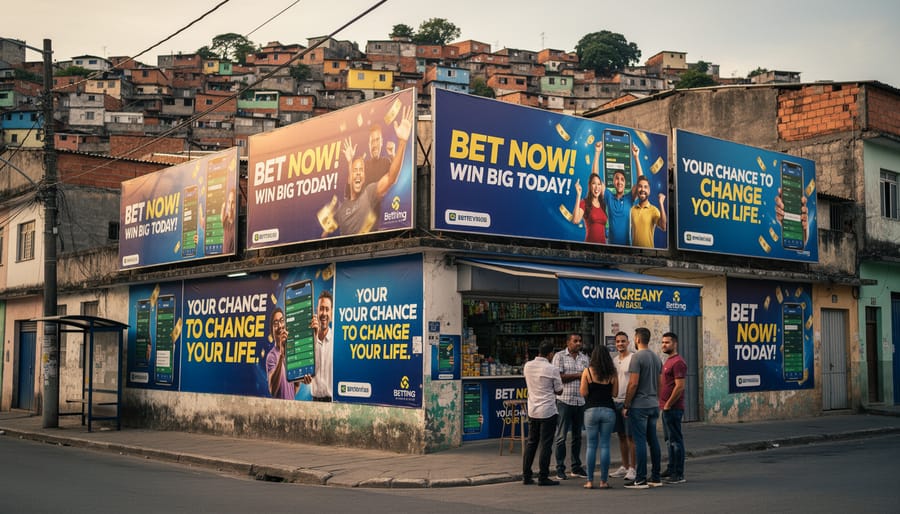
Brazil’s socioeconomic context presents distinctive risk factors that merit careful consideration. Income inequality, ranked among the highest globally, creates environments where lottery participation and sports betting may be perceived as viable paths to economic advancement—a phenomenon social scientists term “poverty-driven gambling.” Research from favela communities indicates that individuals earning less than two minimum wages demonstrate higher rates of gambling participation relative to their income, suggesting disproportionate financial exposure among economically vulnerable populations.
The prevalence of informal employment, affecting approximately 40% of Brazil’s workforce, compounds these vulnerabilities. Workers without formal employment protections may lack access to occupational health resources and face irregular income streams that heighten financial stress—both established risk factors for problem gambling. Additionally, cultural factors including the widespread popularity of jogo do bicho (illegal animal lottery) have normalized gambling behaviors across generations, potentially reducing perceived risk.
Comparative analysis with Portugal and other Lusophone nations reveals similar patterns, though Brazil’s scale and regional diversity demand localized approaches. The Northeast region, characterized by higher poverty rates and lower educational attainment, demonstrates elevated vulnerability markers compared to more affluent Southern states. These disparities underscore the necessity for targeted public health interventions that acknowledge Brazil’s heterogeneous population rather than applying uniform prevention strategies. Evidence-based screening tools validated for Brazilian Portuguese speakers remain limited, representing a critical gap in both research and clinical practice.
Cascade Effects: Poverty, Crime, and Family Disruption
The liberalization of betting markets in Brazil triggers interconnected social disruptions that extend far beyond individual gamblers, creating cascading public health crises across vulnerable communities. Evidence from jurisdictions with established gambling industries demonstrates how problem gambling precipitates household financial catastrophe, with families experiencing sudden loss of savings, unpaid bills, and food insecurity. Research indicates that approximately 35-50% of problem gamblers’ families report severe financial hardship, often leading to housing instability and debt accumulation that persists for years after the gambling behavior ceases.
The correlation between problem gambling and domestic violence presents particularly concerning implications for Brazilian public health systems. Studies from Australia and the United Kingdom document that households affected by gambling disorders experience domestic violence rates 2-3 times higher than the general population, with financial stress serving as a primary catalyst. These dynamics disproportionately affect women and children, who bear the brunt of both economic deprivation and interpersonal violence. Brazilian social workers report early indications of similar patterns emerging in communities with high concentrations of betting establishments.
The strain on social services compounds existing healthcare infrastructure challenges within Brazil’s Sistema Único de Saúde (SUS). Mental health services, already operating beyond capacity, must absorb increased demand for addiction treatment, family counseling, and crisis intervention. Child welfare agencies confront rising caseloads as parental gambling disorders contribute to neglect and family separation. From a distributive justice perspective, these cascading effects place unfair burdens on already marginalized populations while diverting limited public resources from preventive care toward reactive crisis management, raising fundamental questions about whether the economic benefits of betting legalization justify these substantial social costs.

Ethical Frameworks for Evaluating Betting Regulation
Autonomy Versus Paternalism: Individual Rights and State Protection
Brazil’s recent betting legalization crystallizes a fundamental tension in public health ethics: balancing respect for individual autonomy against the state’s obligation to protect vulnerable populations. Classical liberal theory emphasizes personal freedom, arguing that competent adults should determine their own risk exposure without state interference. From this perspective, gambling represents a legitimate entertainment choice, and prohibitions constitute unjustified paternalism that infantilizes citizens.
However, behavioral economics research challenges assumptions of rational decision-making underlying autonomy arguments. Studies demonstrate that betting platforms employ sophisticated psychological mechanisms—variable reward schedules, near-miss programming, and targeted advertising—that exploit cognitive biases and compromise genuine autonomous choice. Brazilian data reveals particular concern: approximately 3-5% of regular bettors develop gambling disorder, with disproportionate impact on low-income communities where predatory marketing concentrates.
The vulnerability principle provides crucial nuance to this debate. Public health ethicist Ruth Faden distinguishes between “soft” paternalism—protecting individuals from choices made under diminished capacity—and “hard” paternalism that overrides fully informed decisions. Brazilian regulatory frameworks must navigate this distinction carefully. Protective measures like mandatory spending limits, cooling-off periods, and advertising restrictions targeting minors can be justified as safeguarding compromised autonomy rather than negating it entirely.
International case studies offer instructive precedents. Sweden’s licensing system combines consumer freedom with robust harm-reduction mechanisms, including self-exclusion registries and mandatory operator contributions to addiction treatment. Conversely, Kenya’s minimally regulated betting expansion has produced documented social harms, particularly among youth populations. Brazil’s challenge lies in crafting proportionate interventions that protect vulnerable groups without unduly restricting competent adults’ liberties.
Distributive Justice and Socioeconomic Inequality
Brazil’s betting market expansion presents profound distributive justice concerns, particularly regarding how gambling revenues function as an informal regressive tax on vulnerable populations. Evidence from Brazil’s National Household Sample Survey indicates that lower-income families allocate a disproportionately higher percentage of their earnings to gambling activities compared to wealthier households, creating what economists term a “poverty trap mechanism” where those least able to afford losses bear the greatest financial burden.
Research conducted by the Brazilian Institute of Geography and Statistics reveals that households earning less than two minimum wages spend up to 8% of their monthly income on betting activities, compared to less than 2% among higher-income brackets. This disparity raises critical questions about state complicity in perpetuating socioeconomic inequality through regulatory frameworks that permit and profit from economically harmful behaviors concentrated among disadvantaged populations.
From a Rawlsian perspective of justice as fairness, policies should benefit the least advantaged members of society. Brazil’s current betting framework appears to violate this principle by generating state revenue through mechanisms that systematically extract resources from lower-income communities while providing minimal compensatory benefits. The promised earmarking of gambling taxes for education and healthcare represents less than 3% of total betting revenues, offering insufficient offset to the documented financial harm.
Case studies from favela communities in São Paulo and Rio de Janeiro demonstrate how online betting platforms exploit existing vulnerabilities, with community health workers reporting increased household food insecurity linked directly to betting expenditures. This pattern exemplifies what public health ethicists identify as structural violence, where economic systems and regulatory choices create differential exposure to harm based on socioeconomic status. Addressing these distributive justice concerns requires policymakers to critically examine whether liberalized betting markets can ever align with commitments to reducing health inequities and promoting social welfare.
The Corporate Influence Problem: International Operators and Regulatory Capture

Marketing Tactics Targeting Vulnerable Populations
Brazil’s betting industry has deployed sophisticated marketing strategies that disproportionately impact economically disadvantaged populations, raising serious ethical concerns about exploitation and informed consent. Recent analysis reveals that operators concentrate advertising in low-income neighborhoods and during programming watched by financially vulnerable demographics, promising rapid wealth accumulation through strategic betting.
Celebrity and influencer endorsements represent a particularly problematic tactic. Popular football players and entertainment figures promote betting platforms to audiences with limited financial literacy, creating parasocial relationships that blur the line between entertainment and commercial exploitation. These endorsements rarely disclose sponsorship details adequately or acknowledge addiction risks, violating principles of transparency central to ethical marketing practices.
Social media campaigns employ behavioral nudges designed to exploit cognitive biases and psychological vulnerabilities. Platforms utilize algorithmic targeting to identify users exhibiting risk-taking behaviors or financial stress, then deliver personalized advertisements featuring testimonials of supposed winners and limited-time bonus offers. Gamification elements, including achievement badges and loyalty programs, normalize frequent betting and obscure actual probability calculations.
Research from the Federal University of São Paulo demonstrates these tactics particularly affect young adults aged 18-25, who show heightened susceptibility to peer influence and optimism bias. The combination of ubiquitous digital access, targeted messaging, and insufficient regulatory oversight creates an environment where vulnerable populations face systematic pressure to engage in potentially harmful betting behaviors without adequate protection or education about associated risks.
Tax Revenue Arguments and Their Ethical Limits
The Brazilian government’s justification for legalizing sports betting heavily emphasizes projected tax revenues, estimated at billions of reais annually, earmarked for education, healthcare, and social programs. However, this utilitarian calculus raises fundamental ethical questions about whether financial gains legitimize predictable population health harms. International evidence demonstrates that gambling-related problems generate substantial societal costs, including addiction treatment, family disruption, productivity losses, and crime, which frequently exceed tax revenues collected. A 2019 Australian Productivity Commission report found that social costs of problem gambling reached $4.7-8.4 billion annually, dwarfing government revenues. In Brazil’s context, where healthcare infrastructure already struggles with resource constraints, the additional burden of gambling-related pathologies may overwhelm treatment capacity.
From a public health ethics perspective, accepting harm to vulnerable populations to finance general welfare programs contradicts the principle of justice, particularly when these harms disproportionately affect economically disadvantaged communities. The ethical framework demands that governments consider whether alternative revenue sources exist that don’t create new health hazards. Moreover, revenue dependence creates perverse incentives where state interests align with increased gambling participation rather than harm minimization, fundamentally compromising the government’s protective role and raising questions about regulatory capture and policy coherence in public health governance.
Case Study: Comparing Brazil with Established Gambling Markets
Portugal’s Harm Reduction Model
Portugal’s decriminalization of drug use in 2001 offers compelling parallels for Brazilian betting regulation, particularly regarding the balance between individual liberty and public health protection. While Portugal’s model addressed substance use rather than gambling, its underlying ethical framework—grounded in harm reduction rather than prohibition—provides valuable lessons for managing addictive behaviors through regulatory mechanisms.
The Portuguese approach restructured drug policy around three pillars: decriminalization of personal use, substantial investment in treatment infrastructure, and integration of health and social services. Critically, Portugal allocated significant resources to prevention and treatment programs, establishing specialized intervention centers that provided free counseling, medical care, and social support. This investment proved essential; studies indicate substantial reductions in drug-related deaths, HIV infections, and social marginalization over two decades.
For Brazilian betting regulation, Portugal’s experience highlights the insufficiency of legalization alone. The Portuguese model demonstrates that decriminalization without robust treatment infrastructure and accessible harm reduction services merely shifts problems rather than resolving them. Portuguese dissuasion commissions, composed of legal, health, and social work professionals, exemplify the multidisciplinary approach necessary for addressing addiction’s complex biopsychosocial dimensions.
Moreover, Portugal’s framework prioritized evidence-based interventions over moralistic approaches, continuously evaluating outcomes through public health metrics. Brazilian policymakers face similar imperatives: establishing comprehensive treatment networks, ensuring accessible services for vulnerable populations, and implementing rigorous monitoring systems to assess regulatory effectiveness. The Portuguese case underscores that ethical regulation requires sustained financial commitment to prevention and treatment, not merely legislative change.
Australia’s Cautionary Tale
Australia presents a sobering case study for Brazil’s regulatory development, holding the unenviable distinction of having the highest per capita gambling losses globally. Australian adults lose an average of $1,200 USD annually to gambling—nearly twice the amount of their nearest competitors. This statistic reflects not merely cultural preferences but systemic regulatory failures that Brazilian policymakers must carefully analyze to avoid replicating.
The Australian experience demonstrates how harm minimization frameworks can falter without rigorous enforcement mechanisms. Despite implementing mandatory pre-commitment systems and advertising restrictions, Australia’s gambling industry has exploited regulatory loopholes through aggressive online betting platforms and sophisticated marketing strategies targeting vulnerable populations. Research published in the Journal of Public Health Policy reveals that Indigenous Australians and lower socioeconomic communities bear disproportionate gambling-related harms, raising critical questions about distributive justice in regulatory design.
From a public health ethics perspective, Australia’s regulatory approach prioritized economic considerations over population welfare. The normalization of gambling through ubiquitous sports betting advertising during family viewing hours exemplifies how commercial interests can undermine public health objectives. Studies tracking emergency department presentations and mental health service utilization show direct correlations between gambling availability and increased psychosocial harm.
For Brazil, Australia’s experience underscores the necessity of proactive rather than reactive regulation. Evidence suggests that once gambling becomes culturally embedded and economically significant, implementing stricter controls becomes politically and practically challenging. Brazilian regulators must establish robust harm prevention mechanisms from the outset, including comprehensive advertising restrictions, mandatory affordability checks, and well-funded treatment services, ensuring that economic benefits do not come at the expense of public health equity.
Ethical Imperatives for Strengthened Regulation
Mandatory Consumer Protections and Harm Minimization
Evidence from jurisdictions with mature betting markets demonstrates that mandatory consumer protections significantly reduce gambling-related harms when properly implemented and enforced. Brazil’s regulatory framework must incorporate these mechanisms as baseline requirements rather than voluntary industry initiatives.
Deposit limits represent a fundamental harm-reduction tool. Portugal’s model requires operators to implement daily, weekly, and monthly deposit caps, with enhanced restrictions for vulnerable populations. Research from the UK Gambling Commission indicates that mandatory deposit limits reduce problem gambling prevalence by approximately 23% compared to self-selected limits alone. Brazilian regulation should mandate maximum deposit thresholds adjusted for median income levels, with enhanced verification requirements for transactions exceeding these amounts.
Self-exclusion programs must extend beyond single-operator systems to create comprehensive national databases. Australia’s BetStop program demonstrates the effectiveness of multi-operator exclusion, reporting 89% compliance rates across licensed platforms. Brazil should establish a centralized self-exclusion registry accessible through both operator platforms and public health services, with automatic enrollment periods ranging from six months to permanent exclusion. Critically, the system must include cooling-off periods preventing immediate reversal of exclusion decisions.
Reality checks constitute essential ethical nudging strategies that interrupt continuous play patterns. Swedish regulations mandate session reminders every 60 minutes displaying time elapsed and net losses. Studies indicate these interventions reduce session duration by 31% among high-intensity users without significantly affecting recreational gamblers.
Algorithmic safeguards should monitor behavioral patterns indicative of problem gambling, including chase-loss behaviors, increased bet sizing, and extended session durations. Ontario’s regulatory framework requires operators to deploy machine learning systems that trigger mandatory intervention protocols when risk thresholds are exceeded. These systems must undergo independent auditing to ensure effectiveness and prevent discriminatory targeting of specific demographic groups.
Treatment Infrastructure and Research Investment
Brazil’s betting legalization presents an opportunity to establish a robust treatment and research infrastructure funded through regulatory revenues. Evidence from international jurisdictions demonstrates that earmarking 1-3% of gambling taxes for public health initiatives creates sustainable funding mechanisms without drawing from general healthcare budgets. The Portuguese model, which allocates gambling revenues to addiction treatment centers and prevention programs, offers a relevant precedent for Brazil given similar linguistic and cultural contexts.
A comprehensive approach requires establishing specialized treatment facilities capable of addressing gambling disorder, which affects an estimated 1-3% of regular bettors according to epidemiological studies from comparable markets. These facilities should integrate cognitive-behavioral therapy, family counseling, and financial rehabilitation services, recognizing gambling disorder’s multidimensional impact on individuals and communities. Training healthcare professionals to identify and treat gambling-related harms remains essential, particularly in primary care settings where early intervention proves most effective.
Concurrently, Brazil must invest in longitudinal bioethics research tracking gambling prevalence, harm patterns, and vulnerable population impacts. Establishing a national surveillance system would enable evidence-based policy adjustments and identify emerging risks before they escalate. Such research should include socioeconomic analyses examining how betting affects low-income communities disproportionately, ensuring regulatory frameworks respond to equity concerns. International collaborations with established gambling research institutes could accelerate Brazil’s capacity-building while adapting findings to local contexts, ultimately creating an ethical foundation balancing economic interests with population health protection.

Brazil’s regulatory framework for sports betting and online gambling reveals a fundamental ethical tension between economic opportunism and public health responsibility. The analysis presented throughout this article demonstrates that current policy trajectories prioritize revenue generation and market expansion over evidence-based harm prevention, despite mounting evidence of gambling’s adverse health effects on vulnerable populations.
The ethical frameworks examined—from Mill’s harm principle to distributive justice theories—consistently point toward a regulatory approach grounded in population health protection rather than fiscal maximization. International comparisons with jurisdictions like Norway and the United Kingdom illustrate that robust consumer protection mechanisms, advertising restrictions, and independent regulatory oversight can coexist with legal gambling markets. Yet Brazil’s regulatory architecture appears to replicate the mistakes of liberalized markets, adopting minimal safeguards while aggressively expanding access through digital platforms and sponsorship arrangements that normalize gambling behavior.
The disproportionate impact on economically disadvantaged communities and individuals with mental health vulnerabilities demands particular ethical attention. When regulatory frameworks fail to address these inequities through mandatory prevalence studies, treatment infrastructure investment, and targeted prevention programs, they violate basic principles of social justice and health equity. The state’s dual role as both regulator and beneficiary creates inherent conflicts of interest that compromise public health imperatives.
Moving forward requires deliberate engagement from multiple disciplines. Bioethicists must articulate the moral dimensions of gambling harm within broader public health frameworks. Healthcare professionals need epidemiological data to inform prevention and treatment strategies. Policymakers must resist industry influence and center regulatory decisions on population welfare metrics rather than tax receipts. Without this collaborative reorientation, Brazil’s betting legalization risks creating a public health crisis that mirrors tobacco and alcohol regulation failures, imposing preventable suffering on its most vulnerable citizens while generating profits for private operators and government coffers.